Chinese Calligraphy vs Japanese Shodo: What's the Difference?
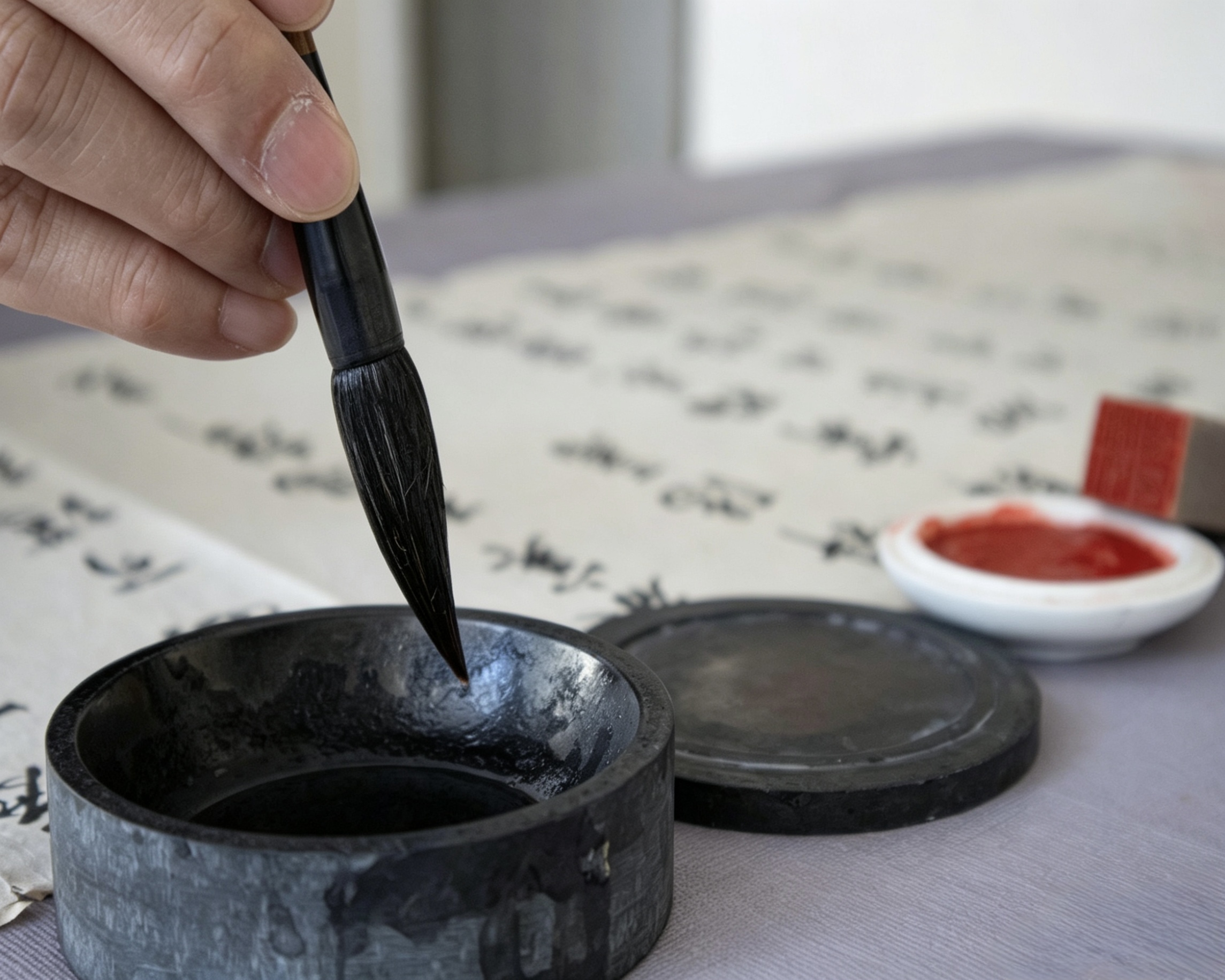
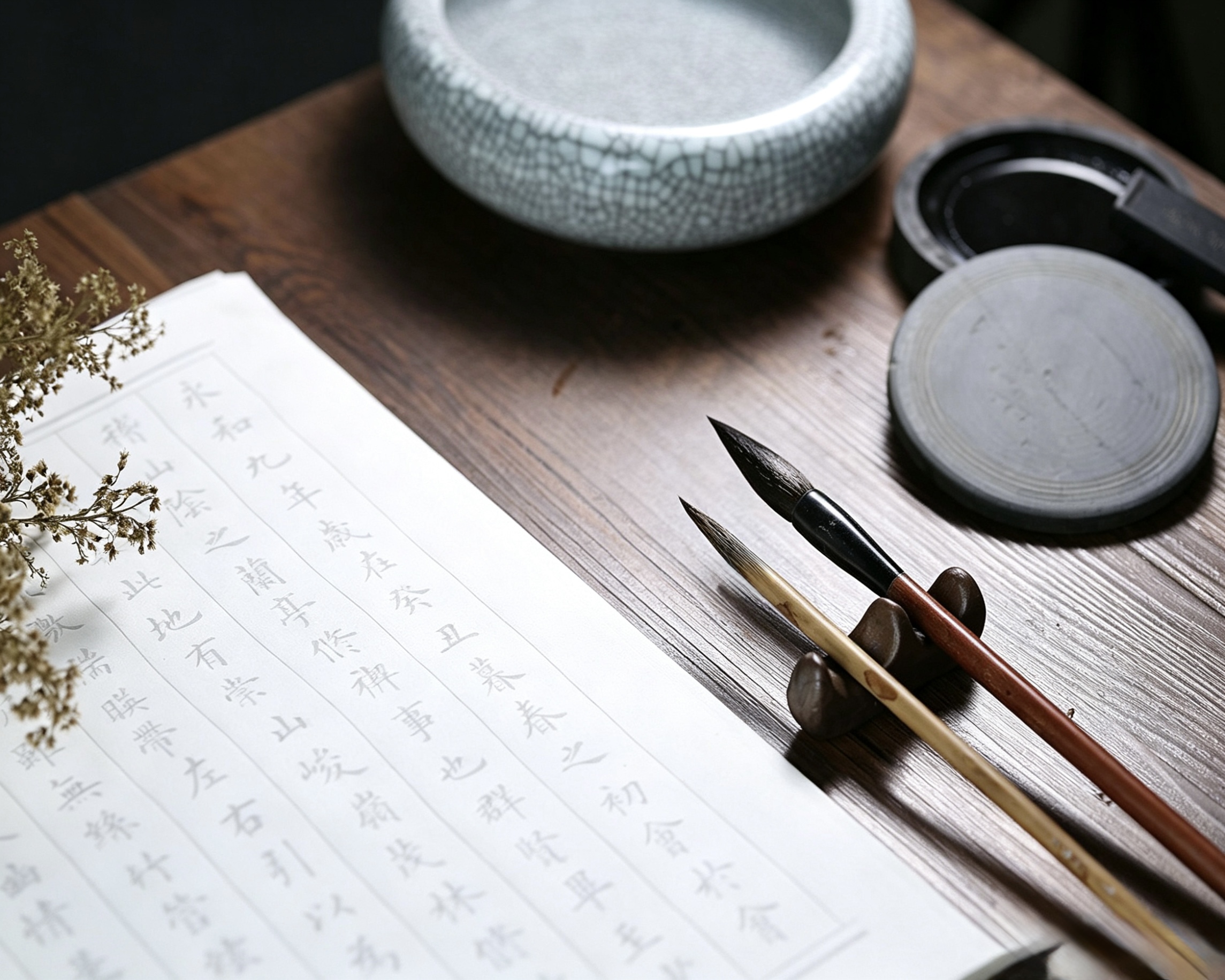
While both Chinese Calligraphy (Shufa) and Japanese Calligraphy (Shodo) share ancient roots and use similar tools—the brush, ink, inkstone, and paper—they have evolved into two distinct artistic traditions with their own unique characters, visual styles, and cultural philosophies.
Here is a breakdown of the key differences between these two beautiful art forms.
1. The Linguistic Toolset: Characters vs. Mixed Scripts
The most fundamental difference lies in the writing systems used by each culture.
Chinese Shufa: Written exclusively using Hanzi (Chinese characters). Every symbol is structured within a precise, uniform square block. The artist works within a completely logo-syllabic framework, whether writing ancient script or modern simplified characters.
Japanese Shodo: Uses a mix of three writing systems: Kanji (characters derived from China), Hiragana, and Katakana (phonetic Japanese alphabets). Hiragana characters, in particular, are highly fluid, curvy, and simplified, allowing Shodo to possess a looping, continuous, and dynamic visual flow that is entirely unique to Japan.
2. Visual Aesthetic and Composition
Because the scripts differ, the final visual layouts on the paper contrast sharply.
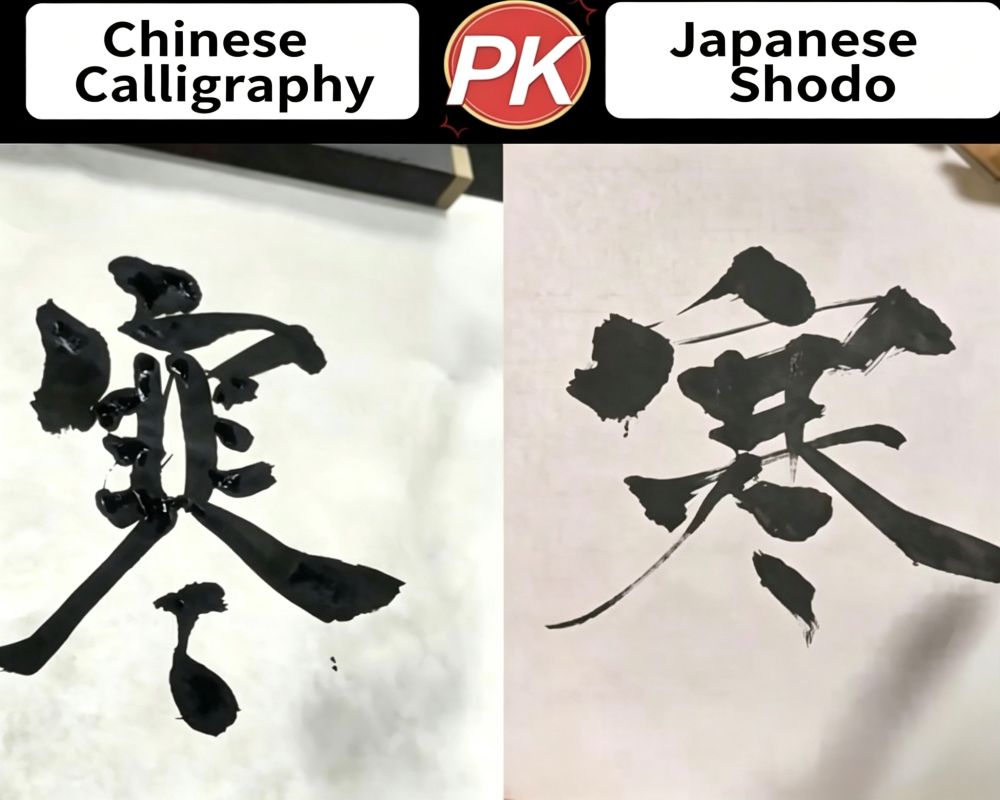
Shufa (Balance and Symmetry): Chinese calligraphy heavily values architectural balance, structural integrity, and historical lineage. Even in cursive styles, there is a deep respect for the traditional "weight" and grid-like symmetry of the characters.
Shodo (Asymmetry and White Space): Japanese calligraphy frequently embraces "Ma" — the artistic use of negative space. Shodo compositions are often asymmetrical, featuring sharp contrasts between thick, heavy ink strokes and vast areas of empty paper. It leans into a raw, minimalist aesthetic.
3. Core Philosophy: The "Law" vs. The "Way"
The difference in their native names reveals a shift in philosophical focus.
Shufa ("The Law/Method of Writing"): The emphasis is heavily placed on mastering traditional techniques, strict brush methods, and honoring historical masters. It is treated as a discipline of cultivating high literacy, impeccable execution, and self-refinement through standard rules.
Shodo ("The Way of Writing"): Influenced deeply by Zen Buddhism, Shodo treats calligraphy as a spiritual path or a "way of life" (similar to martial arts or tea ceremony). The focus shifts toward spontaneity, emotional expression, and capturing the fleeting energy of the present moment. Mistakes are not viewed as failures, but as authentic expressions of the self.
4. Modern Trajectory and Styles
While both cultures share historical styles (like Seal, Clerical, Regular, Running, and Cursive scripts), their modern trajectories look very different. Chinese Shufa tends to stay closer to traditional text and readable characters, heavily emphasizing the replication of classics. On the other hand, Japanese Shodo has branched into Zen avant-garde art, where characters are sometimes abstracted into pure emotional ink splatters and non-readable modern abstract forms.
The Big Picture: Understanding the difference between Shufa and Shodo helps art enthusiasts appreciate the unique cultural soul behind each stroke. Whether you prefer the structural masterclass of Chinese characters or the flowing, Zen-like spontaneity of Japanese script, both traditions offer a profound window into Eastern aesthetics.