Chinese Calligraphy for Stress Relief and Mindfulness
In today’s fast-paced digital world, finding a moment of genuine peace can feel nearly impossible. Our minds are constantly bombarded with notifications, deadlines, and screen glare. While many turn to modern meditation apps or yoga to find their center, an ancient Eastern artistic tradition is emerging as a powerful, screen-free alternative for mental wellness: Chinese calligraphy (Shufa).
More than just a tool for beautiful handwriting or a traditional art form, Chinese calligraphy has been used for centuries as a meditative practice that harmonizes the mind, body, and spirit. Here is how picking up a brush can become your ultimate gateway to stress relief and mindfulness.
1. The Mind-Body Connection: Grounding Your Physical Energy
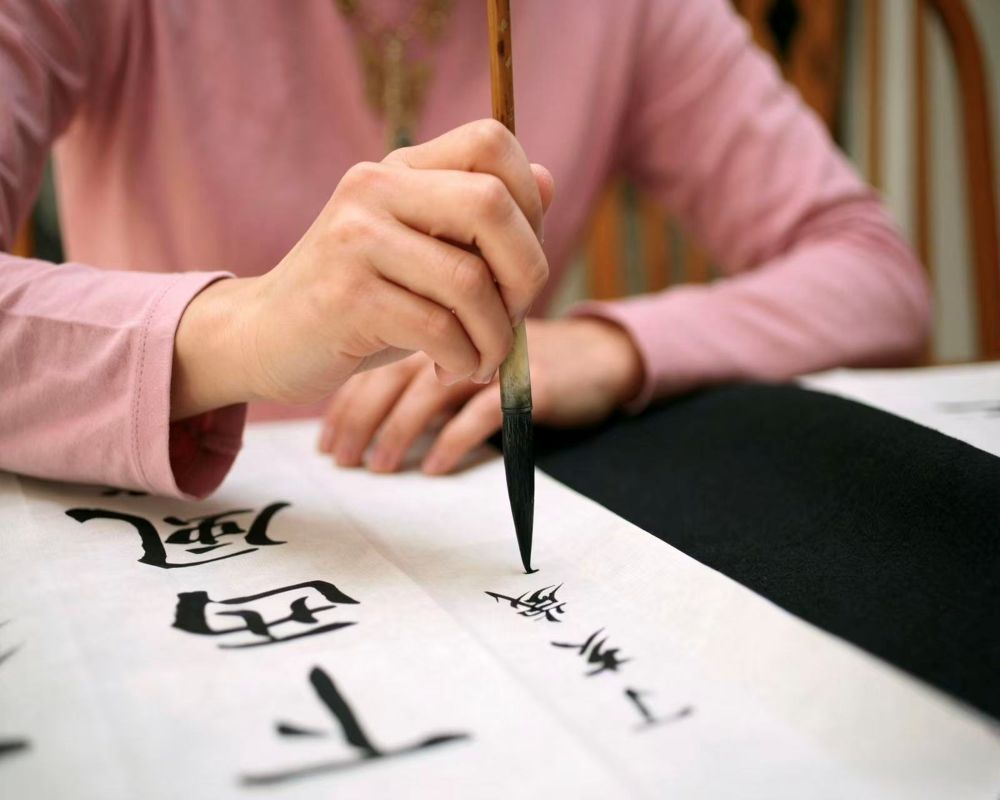
Unlike Western calligraphy, which often relies on the fine muscles of the fingers and wrist, Chinese calligraphy is a full-body experience. It requires a specific, intentional posture: your feet must be flat on the floor, your spine straight, your shoulders relaxed, and your breath deep and even. Holding the brush vertically requires a firm yet gentle grip, channeling energy from your core through your shoulder, forearm, and down to the very tip of the brush.
This deliberate alignment immediately forces you to drop out of your spinning thoughts and into your physical body, serving as an instant physical grounding technique.
2. The Ritual of Ink: A Sensory Transition into Calm
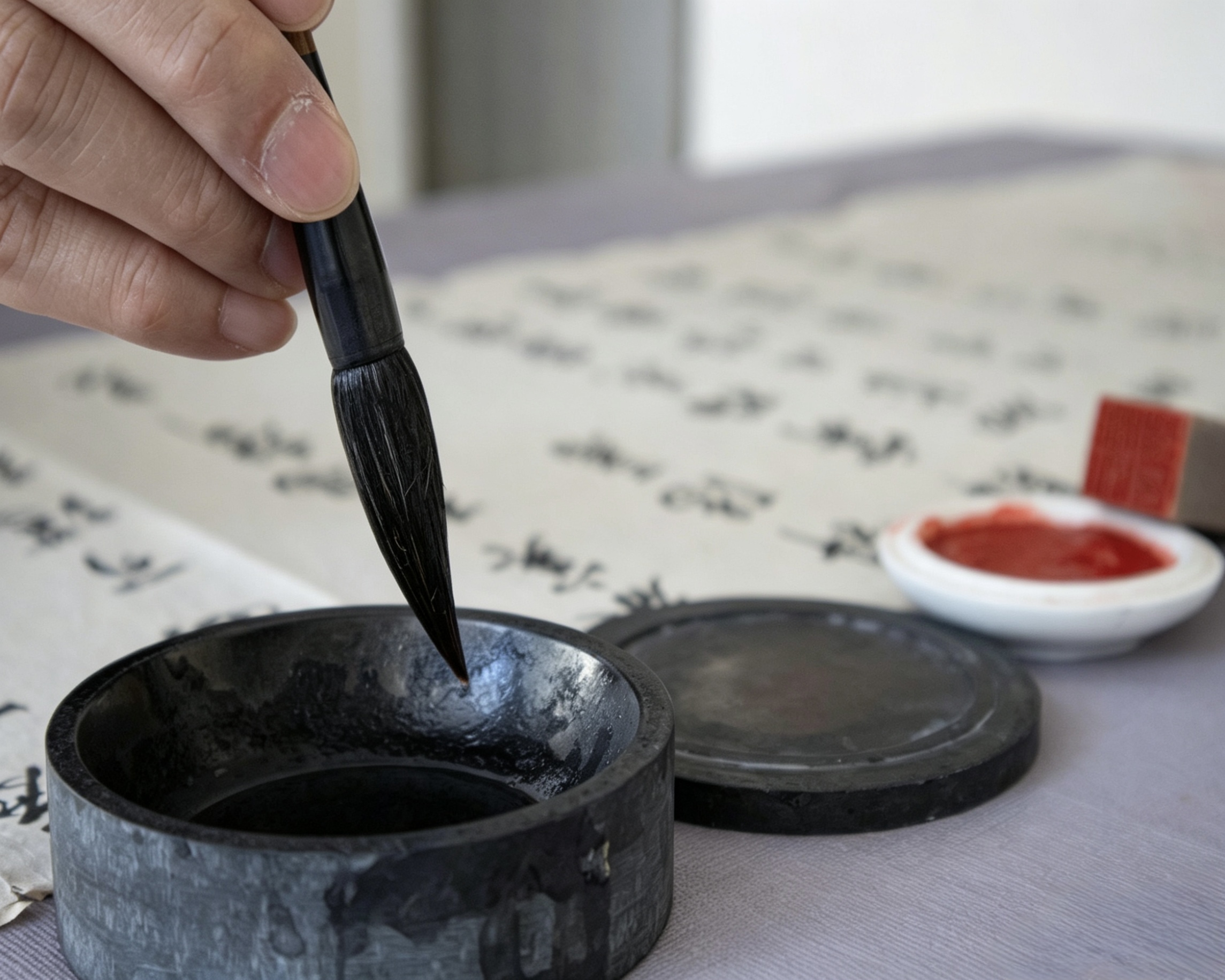
The mindfulness journey of Chinese calligraphy begins long before the brush touches the paper. The traditional process of grinding ink—rubbing an inkstick onto an inkstone with a few drops of water in slow, circular motions—is a powerful sensory ritual.
The rhythmic, repetitive motion allows your mind to settle down. As the rich, earthy scent of the ink fills the air, it signals to your nervous system that it is time to transition from the chaotic outer world into a space of quiet focus. This simple preparation acts as a sensory bridge to mental stillness.
3. Breath Synchronization and Flow State
Every stroke in Chinese calligraphy is tightly bound to the rhythm of your breath. A heavy downstroke is accompanied by a deep exhalation; a swift, lifting movement matches an inhalation. This deliberate synchronization naturally slows your breathing rate, triggering the body’s relaxation response.
Because the absorbent Xuan paper (rice paper) records every hesitation, tremble, or rush of the hand, you are forced to be entirely present. If your mind wanders to your to-do list, the ink will bleed or blob. This immediate visual feedback trains your brain to enter a state of deep "flow"—the psychological zone where anxiety melts away, and only the present moment exists.
4. Embracing the Beauty of Imperfection
In modern life, we are conditioned to delete, undo, and constantly edit our mistakes. Chinese calligraphy teaches a completely different philosophy. Once a stroke is made on the delicate paper, it cannot be erased, covered up, or altered.
This teaches practitioners a beautiful lesson in mindfulness: acceptance. You learn to embrace each stroke as a reflection of that exact moment in time. There are no "mistakes," only unique expressions of your current state of being, fostering self-compassion and reducing perfectionist stress.
5. Cultivating Inner Stillness (Jing)
In Chinese philosophy, the highest goal of calligraphy practice is to achieve Jing (静) — a state of profound inner quietude and clarity. As you watch the rich black ink flow and form balanced structures on the stark white paper, your mind mirrors that balance. Practitioners often report feeling deeply refreshed, mentally clear, and emotionally stable after a calligraphy session, much like the aftereffects of a deep meditation.
The Big Picture: You do not need to be an expert artist or fluent in Chinese characters to reap the therapeutic benefits of Chinese calligraphy. By simply focusing on the movement of the brush, the flow of the ink, and the pacing of your breath, you can transform a simple writing exercise into a beautiful, life-changing mindfulness ritual.